In short
- A workation means working from a place you also want to be, usually for a few weeks.
- As a freelancer you arrange it yourself: check your social security, health cover and travel insurance first.
- Sharing a stay with others is less lonely and often cheaper per person.
What is a workation?
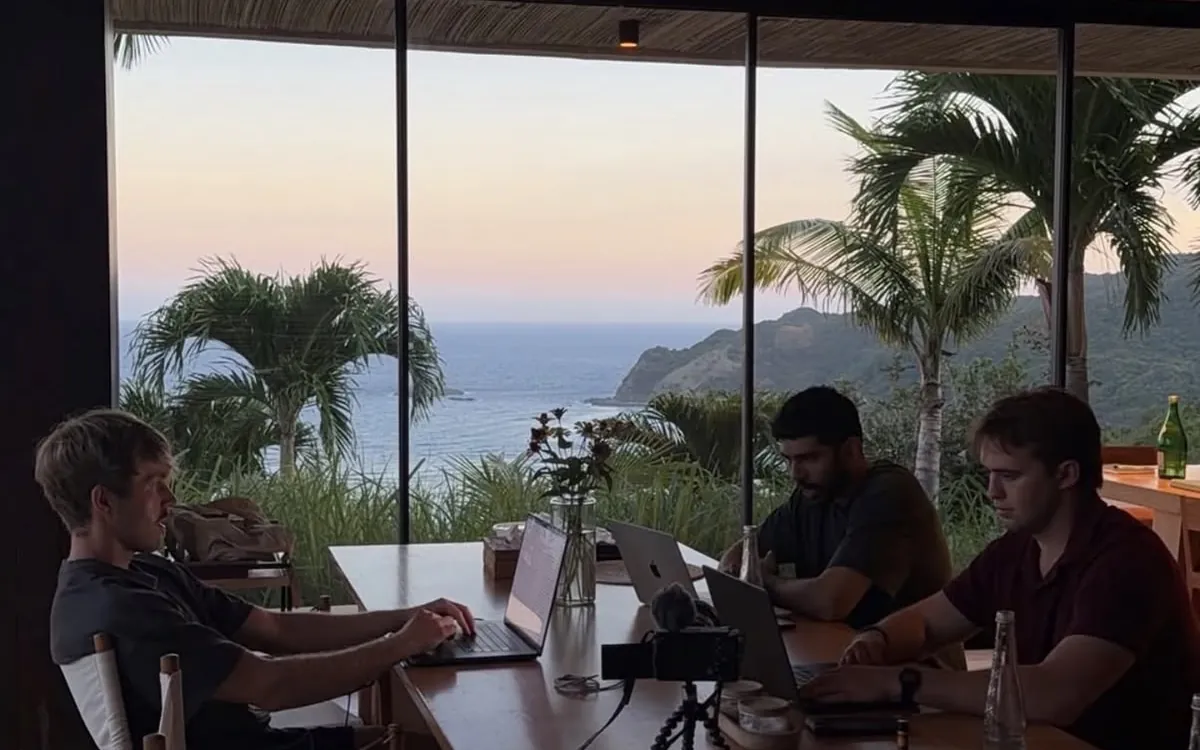
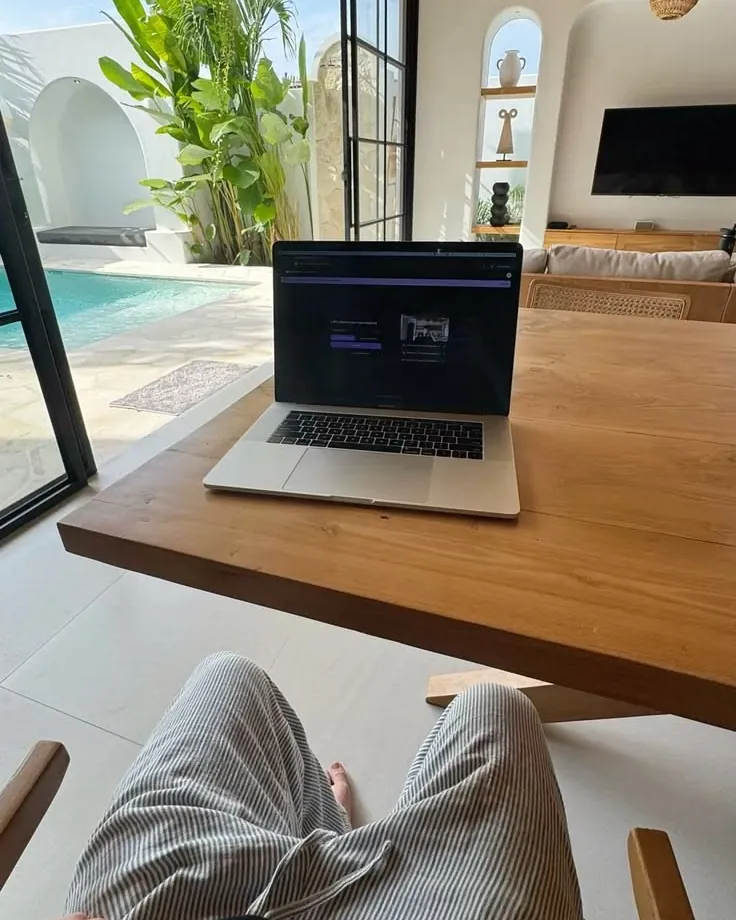
Workation blends the words work and vacation: you keep working, but from a place you also want to be. The Cambridge Dictionary described it in 2020 as a holiday where you work from your accommodation. Unlike a holiday, you need set working hours, good internet and a place to work.
Workation, coliving or work trip: what's the difference?
The difference is who you go with and who arranges it.
| Type | With whom | How long | Who arranges it |
|---|---|---|---|
| Workation | Alone, or with your team | Days to weeks | You or your employer |
| Coliving | Changing housemates | Weeks to months | The coliving |
| Work trip on GOMAD | A chosen crew of entrepreneurs | 2 weeks, a month or longer | An organiser from the group |
Can you take a workation as a freelancer?
Short answer: yes, but sort out your social security, health cover and travel insurance first. The rules depend on where you live; below is what applies if you're based in the Netherlands.
- Social security within the EU. Working temporarily in another EU country? You need an A1 certificate. You stay insured in the Netherlands if you worked there as self-employed for at least 2 months, do similar work abroad and stay away no longer than 24 months. It's free via Mijn SVB.
- Outside the EU. The Netherlands has treaties with some countries, which offer a similar certificate. If the country isn't on the list, such as Indonesia, contact the SVB.
- Health cover. Dutch basic insurance covers urgent care abroad, but never more than Dutch rates. Private clinics can cost a lot extra, and repatriation isn't covered.
- Travel insurance. Choose one that covers medical costs and repatriation, and check that working abroad is covered.
Sources: SVB, SVB, A1 aanvragen, SVB, verdragslanden, Rijksoverheid and Nederlandwereldwijd, checked on 9 November 2026. This isn't personal advice.
How do you choose a destination?
Start with your work, not the beach. Go through these five points:
- Time difference. How many hours overlap with your clients? Bali is 6 to 7 hours ahead of Central Europe, the Canary Islands one hour behind.
- Internet. Ask the stay for a speed test and bring a backup, such as an eSIM.
- Visa. Are you allowed to work there, and for how long can you stay?
- Costs. Stay, workspace, transport and food per month.
- People. Are you going alone, or with a group?
What should you pack?
A laptop stand, a plug adapter, an eSIM as an internet backup and good earbuds. On a GOMAD trip you share a packing list with the group, so not everyone brings the same things.
Frequently asked questions
How long is a workation?
Usually a few weeks. On GOMAD, trips last 2 weeks, a month or longer.
What does a workation cost?
Mostly it depends on your stay. In Bali, for example, a room in a coliving costs roughly US$500 to 1,600 a month; see Working from Bali.
Can I join if I don't know anyone?
Yes. The organiser picks the crew, everyone is ID-verified and you see who's coming before you go.
Robin
Co-founder of GOMAD, with a background in marketing.